Showing posts with label NetGalley. Show all posts

05 October 2018

Stoker's Dracul


Dracul book review

Vampires are real. And the biggest, baddest, best known of them all, that Transylvania tramp himself, is not simply Vlad the Impaler, but rather is something much older, darker, and even more evil. At least that’s what horror writer Dacre Stoker, great-grand nephew of some dude named Bram wants you to believe. Dracul, an official prequel to Bram Stoker’s Dracula, binds hidden pages and notes handed down amongst the family claiming that not only are vampires real, but Bram as a young man encountered them, thus unleashing his historical inspiration, and his ultimate desire for cremation.

Dracul is well-written gothic horror, mimicking the manuscript style of collected letters and diary entries, which is what made Dracula so captivating. The tale within has Bram, out of university but before his time with the Lyceum Theatre, along with his sister Matilda and brother Thornley, fascinated that their childhood Nana Ellen never seems to age. When Thornley’s wife, Emily, begins acting irrationally, not mention the sudden appearance of two puncture marks on her lower neck, their search is escalated into all things creepy and undead. Ellen is, of course, a vampire, seeking to break away from her dark, dread master. A sharp, pointy stake to those who might be able to guess his identity.

Stoker perfectly captures a 19th Century rhythm and environment. The cadence of the letter writing. The usage, and then complete disregard, of the scientific method. All are cleverly and professionally placed. The narrative itself is what takes a while for the reader to fully sink their teeth into. Bram and Matilda’s inquisitiveness as children make for a charming scene setting, but it is not until the hunt is on that the blood of this novel truly gets flowing. Stoker, along with co-author J.D. Barker, do indeed heat up that action to a boiling point. Be patient during that slow simmer.

Bram as an historical action hero certainly works, as Robert Masello in his latest, The Night Crossing, clearly proves. Yet as a prequel, Vlad himself is auspiciously absent through much of the chase. Relegated to shadows and rumor, his origins are mere whispers. He is not the xenomorph from Prometheus coming to birth only to attack and kill its creator, rather, an established evil already reigning as the Big Bad and well on his way to his Carpathian Castle. A true prequel, the story of this Dracul as well as that of Vlad the Impaler, is the story history is demanding.

Another, richer story of narrative significance would be that of the Stoker family history involving Dracula’s initial publication, which was all-too quickly mentioned in the author’s notes. The editing of Stoker’s original manuscript to include those original notes back into the original story would make a fuller, more compelling work of horror than the fiction presented within these covers. Alas, as Coppola displayed in his 1992 film, the sun always rises, sometimes too easily, chasing away those scary shadows into the recesses of our imagination. Dacre Stoker's Dracul, follows a similar path, this one laden with silver.


Fangs so very much to Netgalley and Putnam Books for the howling-good ARC.


As Always,
theJOE

07 September 2018

The 7½ Deaths of Evelyn Hardcastle

7 Deaths of Evelyn Hardcastle book review
The 7½ Deaths of Evelyn Hardcastle is a highly original mashup of genres. A “what if” concept mixing elements of Quantum Leap and Groundhog Day written as an Agatha Christie mystery. The conception is compelling, the story more-than-intriguing, and the fast-paced read irresistible. Congrats, Stuart Turton, on one incredible debut.

Set in the early 20th century, Aiden Bishop is a man with a mission: prevent the murder of socialite daughter Evelyn Hardcastle. He has eight chances to solve the mystery and stop the crime. These chances come as he leaps into different host bodies at the start of everyday, which happens to be the same day, looping over and over again. He deals with the confusion of awakening in different places and in separate situations while also attempting to retrace his steps as he is seeming setback to the go square any time he makes headway. Bishop learns to be resourceful and quickly comes up with plans of communicating between his various hosts as each day, and each host, provides a new clue, and a different viewpoint, on the events ahead.

Turton’s writing style is fresh and illustrative. He retains the cadence of a Hercule Poirot plot, of an old time dinner murder mystery, but brings in new world twists and ideas. Setting the story as a first-person narrative, the reader comes to understand Aiden Bishop, feels the anguish and uncertainty the character faces, and most importantly, learn to like the bloke. More than a man out his element, Bishop is man out of his time in a way. He questions his moves and his decisions. The same old day becomes unique with feelings of hope and promise trickled out amongst the dread and anger. His thought process allows the reader to absorb the mystery but not stray too far ahead. Turton could have easily gone all-out gonzo, striking forth as a disrupter of past genre reads. Instead, he crafts his tale as a careful homage, feeding off the literary past, and blossoming into a unique creation, one that is bright and inviting.

One might look for a scorecard to keep up with the characters, their references, a time stamp for activities. A word of advice? Simply pay attention to the story. Turton cleverly provides clues and details along the way allowing you, dear reader, to play the role of the ninth host.

Many thanks to NetGalley for the advance, and completely enjoyable, read.


As Always,
theJOE

13 July 2018

Ohio

Ohio begins with a funeral and ends in murder. What happens in between is as depressing as a high school reunion, but man, Stephen Markley’s writing elevates the wrist-slashing fatigue into a Stanley Kubrick-like, art-house style circa Clockwork Orange. Still, Ohio is 500-page work that feels like it takes all four years of the riding the after-activities bus route to read through.

Ohio Stephen MarkleyMarkley recounts the impromptu high school reunion of 2013 following the incredibly-pitiful-it’s-laughable funeral of fallen solider Rick Brinkland as told through the antics and mostly-troubled thoughts of four New Canaan alum, each getting a novella to tell their tales of woes: of trying to fit in, on being attracted to the wrong gal or guy, running away from responsibility, and the youthful persistence of taking the moral high road. After all, if Kevin Smith’s Clerks taught us anything, it’s that’s what high school is all about: algebra, bad lunch, and infidelity. Markley would add “with a ton of drugs” to that statement as apparently that’s all early 21st century kids in the Rust Belt seem to do. Ohio captures all of that and more. Sometimes, that’s too much.

Like its namesake river and the first ten years of the Columbus Blue Jackets’ existence, Ohio rambles on and becomes unwieldy. Markley’s accounts run so deep an Excel spreadsheet is needed to capture the dramatis personae, their nicknames, associates, sexual partners, and addiction of choice, because there is four years’ of catch up required for the reader while the story’s hook, that of the murder mystery, comes so late in the final act it’s nearly a post-credits zinger in a Marvel Studios film.

Aside from the back-and-forth storytelling told by a former basketball player, a beauty queen, a cheerleader, and a nerd, Markley builds a heavy universe, and one that is completely recognizable as anywhere in America and has the scars to prove it. Ohio may be depressing and fatalistic, but Markley’s craft brings a shine to this Shinola and casts a sense of importance to any of the fatalism plaguing fulfillment-seeking millennials. Unfortunately, this nine-course meal version of a history lesson suffers from distention well before any sort of a hopeful moral can be splashed back with Scotch.


Serious thanks to NetGalley and Simon & Schuster for the ARC. I just need a restorative nap and a mini-marathon of Teen Titans Go! for the laughs and I’ll be good to go.


As Always,
theJOE

19 June 2018

Thrill Girl

Jack Curran Thrill Girl
Thrill Girl has all the ingredients of a great genre read. Set in 1950’s LA, you got the war-hero-turned-beat-reporter, a leggy blonde, gruesome murders, ex-Nazis, and smoking. A lot of smoking. So much that the pages are saturated with tobacco. Stirred, definitely not shaken, within, author Jack Curran mixes an exciting tale of murder, vigilantism, the quest for truth, and, why not, even a monster. The plot is original, the characters are entertaining, but man, Curran doesn’t quite pour out the voice for the hard-boiled tale Thrill Girl has every right to be.

Curran, working with a pseudonym, places himself in the story as a reporter looking into the vigilante known as Thrill Girl. He wants to get the As for all the Qs, or at least all the journalistic Ws surrounding this woman. Is she a hero? Or a threat? A typical femme fatale, or a beauty who’s a beast? Curran, the reporter, works through the story as Curran, the author, cleverly reveals pieces of the mystery at the right times. The wrong times are what drags the tale down. The dialogue can be plain jane dull as are frequent scene set ups. Curran might have the right recipe, but needs to work on the flavor. Missing is the quick rat-a-tat pulse of a Chandler or the immoral vulgarity of Elroy. Thrill Girl could be Glenfiddich instead of Old Grandad.

What Curran might lack in style, he rips right ahead with plot, and in all honesty, makes the read entertainingly fun. The mystery is tight and remains good to the last drop. And Curran the reporter, is actually a good egg, one you don’t want to see crack on a desolate alleyway in old-time Hollywood.

Many thanks to NetGalley for the advance edition and the hard-boiled fun.


As Always,
theJOE

27 April 2018

The Bigger Picture

Ben Fritz of the Wall Street Journal loves movies. He is passionate about the experience of communally watching a film, the unique ability for artists to tell their stories, and the Hollywood business machine behind it all. But man, he hates franchise features. From Marvel and DC to Star Wars and Star Trek to dinosaurs and robots, he sees these spectacles as indie film destroyers and creative blockers. To some extent, he might be right. What Fritz seems to have forgotten along the way, and a point that is only marginally made during the wrap-up of his book The Big Picture, is that movies, yes, even those about super-heroes and Jedis, are supposed to elicit an emotional response, be that enjoyable, fun, or even disturbing. The Big Picture is an important, topical,
Big Picture, Ben Fritz
timely read, and one that can be quite depressing at times in regards to the state of the industry, and with that fact that he just can’t get over that super-hero hurtle.

Fritz focuses his book on the parallel fall of both Sony Pictures and of mid-budget adult dramas industry-wide. Taking advantage of 2014’s hack, Fritz provides incredible insight into the studio that, honestly, never could have happened if that hack did not occur. The book runs with a documentary style narrative on Amy Pascal, Michael Lynton, and Sony’s quest to remain as an actor-friendly studio in an era where big-budget franchises quickly became the rage of the machine, and at a time when Sony had one, single franchise, that surprisingly couldn’t compete: Spider-Man. Fritz’s on-going commentary, about how the franchises being overseen by the Disney umbrella (incorporating Marvel, Lucasfilm and Pixar), Warner Bros, and Fox propelled those studios ahead of the others by incredible margins with arguably less creativity, however, quickly becomes repetitive. He’s a voice in the wilderness screaming for common sense and a return to artistic measures, but one that is being smothered by the mass of fanboys, geeks, wizards, and Disney princess consumers.

But what if today’s current state is not all bad? Yes, studios have pared down their offerings, but what if in doing so, they are making better films? Creative films with substance guided by an artistic venture and not a committee? Fritz breaks down the financials of how a film like Steve Jobs may or may not make a profit and expands that equation to the first Spider-Man film by Sam Raimi. Yet he never scores an interview with an actor or director who made it big, and whose work benefited as a result of being in such a franchise. An artist, like Jon Watts who, regardless of making Cop Car, might never have achieved a grand success were it not for Spider-Man: Homecoming, or an actor such as John Boyega getting his huge break with The Force Awakens.

As part of those financials, Fritz gets into the former importance of DVD sales, and how the loss of that income was instrumental into the disappearance of mid-range fare. VOD and direct-release methods were discussed as alternatives, but financials on digital purchases and rentals were not given any viable notice. And perhaps it is still too early for analytics on such info. However, can it not be said that the successes of the X-Men and Deadpool films can directly lead into allowing studios, such as Fox, to release The Shape of Water and Three Billboards Outside Ebbing, Missouri? Fritz only makes tangible connections.

Look, I am an indie film snob. I’m the guy hitting film festivals to see the latest from Jim Jarmusch and Wes Anderson while boycotting Michael Bay nonsense and Seth MacFarlane comedies. I prefer those serious dramas that compel thought and analyzation, to experience that fresh creative vibe. But man, the geek in me eats away at Marvel, Star Wars and Star Trek, franchises that I will defend as much as I love Bottle Rocket and Ghost Dog. I think there can be such compromise between art and commercialism. I think that if people are going to the cinema, even if it’s, ugh, Sausage Party, then the medium is being absorbed, and propagated. And that should be considered a win.

The Big Picture is a good read and a fantastic insider’s look into the studio system. However, the removal of the constant commentary could have reduced this repetitive-at-times read from a full book to a powerful article in the New Yorker.

Many thanks to Houghton Mifflin Harcourt and NetGalley for the advance reader’s copy. I find it deliciously ironic that I am writing this review on the eve of possibly the greatest franchise release of all time: Avengers: Infinity War. I have tickets for Saturday’s show.


As Always,
theJOE

07 March 2018

Escapism

Brad Meltzer - Escape ArtistNew York Times best-selling author Brad Meltzer returns with his latest thriller that easily contains everything one would expect from the author, and from the genre. Like any disaster movie from the 70s, The Escape Artist is heavy-handed for the first full half of the book. Packed with character development (A divorced military mortician with a conveniently-short nickname! A hotshot, always-in-control artist with trust issues on the move! Dastardly-evil killers on the prowl!), situational set-ups (Flashbacks to the past that are haunting and relevant! Escape from Alaska! Dover Air Force Base, because, Delaware, man!), and of course, a hefty heaping of people sticking their noses into business they should leave well alone. But seriously, without these tropes, where would the fun be?

The Escape Artist is a fun, escapist (ahem) read, once the action finally kicks in during the second half of the book. Betrayals, twists, and revelations a plenty that are satisfying and, in a few instances, actually surprising. Having the lead, Jim “Zig” Zigarowski, as a military mortician is a unique archetype, as is Nola Brown, the Army’s artist-in-residence. Meltzer makes great use of the setting, bringing realism and an authentic look at the procedures for an Air Force base dealing with care for the fallen.

Whereas his angle of incorporating Harry Houdini and his devices in with the US Government is as close to the standard conspiracy-theory-Meltzer as this book gets, that is the one plot element that deserved more attention instead of focusing on the standard cat-and-mouse chases involving Zig and Nola and their nefarious assailants. After all, this is The Escape Artist, not The Mortician. A deeper sense of legerdemain would have been most appreciated. The true escape artist here is Brad Meltzer himself, who pulls back the curtain on a fun, albeit standard, genre thriller.

Thanks to NetGalley and Grand Central Publishing for the advance sleight-of-hand read.


As Always,
theJOE

30 January 2018

How to Stop Time Without Losing your Head

Not too deep into reading Matt Haig’s How To Stop Time I figured it all out. This is Highlander, man. I mean, without the swords, and the Quickening, and the Prize, and the Kurgan. And in this instance, the story is not dealing with immortals from Zeist (Right? What? Oh nevermind…) but long-lived humans who age at about a ratio of one year for every fifteen, and where Ramirez is really an old, by close to a thousand years, geezer named Hendrich who doesn’t look to train, instead unionize and hide. But yeah, Highlander. And in missing the sword-play and haggis recipes, man, this is rather dull.

How to Stop Time, Matt Haig
Haig, perhaps, might not take offense at that last sentence as he deliberately shows, through the life of 439-year-old Tom Hazard, that life without end can be dull and slow and repetitive. Fortunately, the book is a fast, entertaining read. Haig gives life and passion to Hazard, who is slowly realizing that he can perhaps fall in love again, which goes against the rules of the Albatross Society, of which he and other long-lived ones survive under the always-watching Hendrich.

Using a tried-and-true Highlander technique, the narrative within How To Stop Time flashes between periods of Tom’s long life in his more-interesting past with what is happening in present-day London, where not much happens other than internal, and sometime eternal, debate, and the narrative suffers as a result.

The issue with How To Stop Time is that there is no prize to be won, only self-fulfillment, and even that comes by way of a simply-obtained climax making the novel ironically run out of time and leaving plenty of unanswered questions, particularly regarding the future of the Albatross. Hazard, through Haig, seems content in focusing on the personal nature of the future. Haig’s words save the day as he truly brings forth meaning and life through well-constructed illustrations and thoughtful character play building Hazard into a likable, relatable chap who steps up in answering the who wants to live forever question in a quiet, surrendering way. Admittedly, adding in a few sword fights could have been fun.


There shall only be one NetGalley, who provided this ARC in return for a silly review. Thanks as well to Viking for the timeless read.


As Always,
theJOE

20 November 2017

God 101

Biblical, and using that term generically, texts aside, author-scholar Reza Aslan charts the history – and the concept – of God, providing a fascinating follow-up to Zealot, where he de-constructed and then re-constructed a historical look at Jesus the Messiah. Here, Aslan does not solely present the Jewish/Christian/Muslim God, but theorizes how the idea of “god” is so prevalent with human history; a concept that either most people, devout or not, might have either taken for granted, or simply not have given an origin story much thought. After all, the God of the Big-Three never really required an origin as, in the case with those religions, In The Beginning… God… Right?

Within God: A Human History, Aslan presents a palatable historical journey that traces the idea of God starting from prehistoric times, where an all-encompassing spirit of nature was dominant, to the pantheon of Greek, Roman, and Egyptian gods, to how monotheism became dominant after the Babylonian conquest of Israel, through the birth of Christianity, and finally to the rise of Islam. The pacing skips ahead through history at an outstanding rate. Aslan devotes significant time to the prehistoric concept of God, pointing out the examples of the Trois-Frères caves of southwest France and the stone temple of Göbekli Tepe in Turkey, but then rockets ahead to introduce the God of the Big-Three, yet spends startling little time in referencing why other cultures have been able to follow religious systems, such as Buddhism, without a deity at their center. Rather, he focuses much of his thesis at the idea of a humanized God.

Aslan approaches the topic as subjectively as possible and, as was bluntly noticed in Zealot, does so without the allusion of faith - for the most part. Aslan does present a beautiful illustration in showing that God is akin to a prism of light, where yellow and blue and violet can all be viewed as perspectives change, yet it is all light from the same source. As an open-minded Christian, this is a outlook I have long adhered to and appreciate the back-up in these conservative times. Aslan, however, goes several steps further with his personal enlightenment of pantheism – that “God” is present in all creation at all times and with everyone. This is his explanation on how one god could be capable of both good and evil, as the concept of “god” has been thoroughly humanized and personified. Aslan is committed in his argument, but such beliefs might be seen as heretical with his Christian and Muslim readership, while the less devout might placate such as hippy-dippy baloney.

God: A Human History is successful in showing the importance of God, which is the true underlying factor in tying humanity together.

Many thanks to NetGalley and Random House for the opportunity to read Aslan’s latest and consider this review my recommendation for others. Read it for the history, for the viewpoints, for the opinions, just keep your faith on hand as a bookmark.


As Always,
theJOE

02 November 2017

Revenge Served Cold

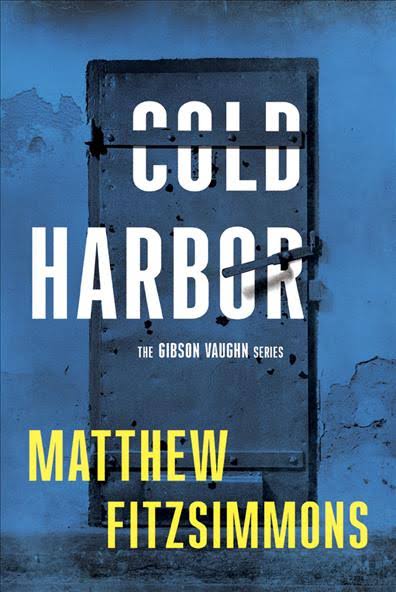
Following the Empire Strikes Back-sized cliffhanger that ended Poisonfeather, Matthew FitzSimmons’ messed-up ex-Marine hacker Gibson Vaughn returns after an eighteen-month absence and is looking for revenge. And although Gibson wants a heaping served ice cold, his thought processes are similarly frozen. His interactions with PTSD-originated ghosts clearly show is not on the top of his game as he was in the debut The Short Drop. FitzSimmons does a fantastic job at getting into Vaughn’s complicated head and makes him sympathetic voice as the reader commiserates with his on-going stress. For all the internal conflict, however, the first act narrative suffers.

If Cold Harbor was season 3 of the Gibson Vaughn drama on FX (and not a bad idea actually, you paying attention Mr. Landgraf?), the network would be hard pressed to ramp up new viewers without the benefit of binge-watching. The novel has a similar circumstance where the familiar reader must fight to play catch up, yet rewards loyal readers to the very end. For someone new coming in who just happens to pick up a copy at the neighborhood Barnes & Noble? Fuhgeddaboudit. FitzSimmons works in backstory and allows a catch-up with the on-going mythos, but initially the reader can be just as confused as the story’s protagonist.

FitzSimmons weaves together action with a hearty bit of internal self-loathing and angst. Gibson’s conversations with his ghosts are not merely metaphorical, but a plot device that, thankfully, does not overstay its welcome, and, contrary to the standard cliché, borders on the detrimental.

Plot-wise, FitzSimmons picks up on the pseudo-cliffhanger from The Short Drop and has Gibson go after the missing George Abe, who was completely MIA during Poisonfeather, while reuniting with cast members from both previous books, strengthening this creator universe. Another strength that gets focus is Vaughn’s humanity and his tendency to doubt, his own fallibility. A hacker by trade, Gibson is by no means the super-genius Cisco Ramon from The Flash, nor do his skills present the ultimate deus ex machina in planned contrivances. He’s good with code, not so much with relationships, and striving to better at both.

Cold Harbor, named for the Blackwater-ish PMC ne’er-do-well, brings a fitting conclusion to the Gibson Vaughn trilogy. FitzSimmons has created a likable character with an enjoyable series. Vaughn is cocky, but knows his limits, more introverted than a one-line joker, and deserves a return engagement. Get working, Matt.


Thanks to NetGalley and Thomas & Mercer for the advance proof, for not only Cold Harbor, but introducing me previously to The Short Drop and Poisonfeather. I have certainly enjoyed the ride.


As Always,
theJOE

21 September 2017

Another Countdown to a Different Doomsday

The Batman/Flash crossover is a tease and, like most teases, the end result could have been presented in half of the time, and honestly, with more of a kicker to the ending that, anyone familiar with the origins of Comedian’s button, would have surmised from the beginning.

Looking at that beginning, Batman/Flash: The Button collection excludes the issue/s where the blood-splattered button from the Watchmen series first arrives in the DCU proper. Having the button residing in the Batcave is gospel and has as much needed backstory as that huge T-Rex statue Alfred is constantly dusting. Instead, this crossover provides a fun fight between the Batman and the Reverse Flash that any fan of the Flash’s CW TV show will enjoy, includes an unnecessary visit to the Flashpoint universe that no one really asked for, and is packed with tons of foreshadowing and set up for DC’s upcoming Geoff Johns’ project that is supposed to unite the Watchmen characters with the mainstays from the DCU. Most assuredly, Alan Moore is already spinning in his self-dug grave.

This edition collects two issues apiece from the current runs of both Batman and The Flash. Tom King writes Batman and is paired with artist Jason Fabok, whose art is really what elevates the book. Like the DCEU movie Batman, Fabok’s character is all scruffy and gray, silent and righteous. Fabok  borrows the nine-grid panel layout that the Watchmen made famous, and does justice to the homage. The Flash issues are written by Joshua Williamson, who is both contemporary and safe. Veteran artist Howard Porter provides visuals that are punchy at times, sketchy most others. The work of John Dell, his finisher from their long-time-ago JLA series, is sorely missed.

Throughout the issues, Batman and Flash fight Reverse Flash, run through time, and question the existence of the button without coming to a meaningful conclusion. A Watchmen character makes a kinda-sorta cameo. A tease of the incorporation of a long-standing DC icon fills the epilogue, concluding a tale that is over almost as fast as, well, you-know-who.

This collection is successful from the standpoint that the creators brought forth a product they were commissioned to make: an interesting lead-up for November’s Doomsday Clock. Another Countdown in the DCU, albeit tighter and contained. Another Doomsday, albeit less Kryptonian in origin. Consider me teased.

At least Blue Beetle didn’t die in this one.

A big Bat-thank you to my Flash-friends at NetGalley and DC Comics for the preview ARC.


As Always,
theJOE

19 September 2017

The Weight of the Deal

Adapting a 19th Century Russian fable into a contemporary setting, albeit one 30 some years back in the hey-days of the early eighties, and from a first-time author no less, can be considered a gamble. With Queen Of Spades, Michael Shou-Yung Shum doubles down and beats the house. And as much as I would like for that to be the last gambling metaphor of the review, the speed and tone of the book simply will not allow me to throw down markers on Odd when the roulette wheel will definitely come up Even. Shum, you see, has a way of stacking the deck in his favor.

Set in a unique casino in the Pacific Northwest, Queen Of Spades focuses on a new dealer and his quest to understand the system of Countess, a legend in those parts who only plays the high-stake tables. Shum deals in other players, a dying pit boss, a sad-sack gambler, the ex-wife attending 12-step recovery meetings, a palm-reading teen among others, whose tales are just as unique to that of the dealt hand. More Robert Altman than Woody Allen, although Shum plays tight with themes of both humor and friendship, Shum focuses on his cast of characters, ensuring the prime players are available for the climatic big deal. By the end of that hand, and the read, when all players have called, a few of those folded tales become lost amongst the victory of others, and is a slight problem that is easily forgotten and forgiven.

Shum has a light, easy tone making Queen Of Spades a fun read not only through his narrative, but also as he picks and tempts with the theory of the gamble, the strategy behind the play, and how luck envelops it all.

Many thanks to NetGalley and Forest Avenue Press for dealing me into this well-played round. I feel like a winner.


As Always,
theJOE